Serving the Community With Gardens

In 2025, over 450 gardeners and family members took part in community gardens sponsored by the Community Garden Coalition. The members of our all-volunteer board, and the volunteer garden leaders all put in many, many hours working to support those gardeners and keep these important community projects going for another year.

We want to thank everyone who has volunteered to help maintain these spaces. We thank the individuals, organizations and entities that have allowed the use of their land. AND we thank all of you who have donated money to help purchase water, mulch, equipment, infrastructure, services, plants and more!

As we head swiftly to the end of this year, here are a few of the faces of community gardening in Columbia this year. We are still looking for more support to flesh out our budget for next year. We’ve only reached about a quarter of our goal of $7,000 for December giving. Please consider adding your own contribution via CoMoGives, the local giving campaign! Every contribution counts, and small ones are our bread and butter. Plus, while you’re there you have an easy way to give to so many other worthy causes in our community.

Or, of course, you can always contribute via our PayPal account, or mail us your check for a direct, no-fees contribution.

Community Gardens Thrive With Your Support — Donate During CoMoGives!

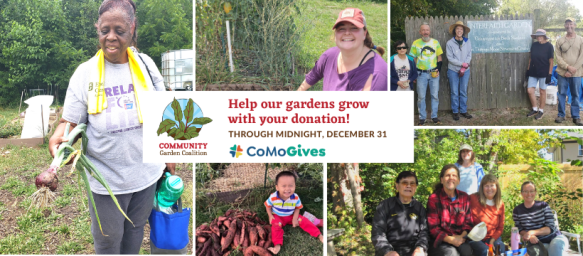
Collage of photos featuring community gardeners in their gardens and the text, "Community gardens thrive with your support! Donate December 1-31" plus logos for CoMoGives and the Community Garden CoalitionA Message From our Board President, Lindsey Smith

Sweet potatoes. That humble root crop has been part of my community gardening story from the very beginning. And in many ways, they remind me of the Community Garden Coalition itself. Just as a sweet potato vine spreads its leaves to nourish the tubers beneath, the Coalition stretches its support to each member garden, supplying the compost, seeds, plants, water, and supplies our gardeners need to grow.

A gardener shows off the sweet potatoes she just harvested

A Unite4Health gardener

I didn’t even like sweet potatoes as a kid—perhaps because they were tied to a marshmallow-covered holiday casserole I really didn’t like. But fresh sweet potatoes dug right out of the garden just before the first frost? That’s an entirely different story.

More than a decade ago, I joined the Windsor Street garden as a somewhat novice gardener. I had two very small kids, and we commuted everywhere by bike and trailer. The garden sat a mile uphill from our house, so I knew I needed to choose something easy to care for because I wouldn’t get there every day. The Community Garden Coalition was giving away sweet potato slips, so I went with those. The kids helped me tuck the slips into the bed and mulch with straw. We visited every week that long, hot summer—watering occasionally but mostly watching the vines tumble and stretch across the bed. A little garter snake took up residence under the cool straw. When there wasn’t weeding to do in our own plot, I’d weed the community herb area while the kids ran around or played in the trees nearby. We met a few gardeners—Kathy Doisy, of course!—and Kip Kendrick, our neighbor and garden leader, who let us borrow tools from the shed across the street. One gardener introduced me to a heat-loving green I had never seen before: New Zealand “spinach,” which I still grow today.

a mother and school-age daughter pose in the garden with a box lid full of sweet potatoes

Unite4Health gardeners

By late October, as the days shortened and the kids started talking Halloween costumes, it was time to harvest. I biked up that hill one more time and we pulled back the thick mat of vines. I had never harvested sweet potatoes before, and tracing each vine to the cluster of fat, rust-colored tubers felt like uncovering buried treasure. The kids were thrilled to dig into the soil and pull out not one, not two, but sometimes five large sweet potatoes all nestled together. And it truly was treasure—we harvested nearly 50 pounds from that 4 x 8 plot of black gold. I had to leave them in a box to pick up by car because I couldn’t possibly bike home with two little kids and all those sweets!

We’ve grown sweet potatoes at our community garden plot (now at Friendship Garden Club) every year since. When the harvest is abundant, we share. When deer get at the vines or our attention is pulled elsewhere, we savor a smaller crop at Thanksgiving. No matter the year, the plant amazes me. Tended well, it reliably yields so much food.

A pair of gardeners standing in their sweetpotato patch hold up the first potato they harvested

Ninth Street gardeners

Our gardens do the same. They give us community, nourishment, healthy routines, and unexpected discoveries—of courage when challenges arise, of commitment to our food-insecure neighbors, of support when it’s needed most.

This time of year, as we participate in the COMO Gives campaign, we look to our larger community for that same support. Our all-volunteer board depends on community donations and small grants to keep our gardens growing. Every penny you give goes directly to seeds, plants, tools, mulch, compost, lawn mowers, sheds, and everything else that keeps our gardeners thriving.

Please consider a donation of any amount to the Community Garden Coalition through CoMoGives or through the donations page of our website during December, and help keep our sweet potato vines growing—both literally and figuratively.

CoMoGives logo

A warm and happy New Year to you and yours, from all of us on the CGC Board.
Saving the Ash Street Garden

Last January, the Community Garden Coalition was contacted by the owners of the property that has been the home of our Ash Street Garden since 2007. They had decided to reclaim the western half of this large property for other uses. This meant we needed to clean up that half and move several gardeners and a recently installed shed over to the remaining eastern portion.

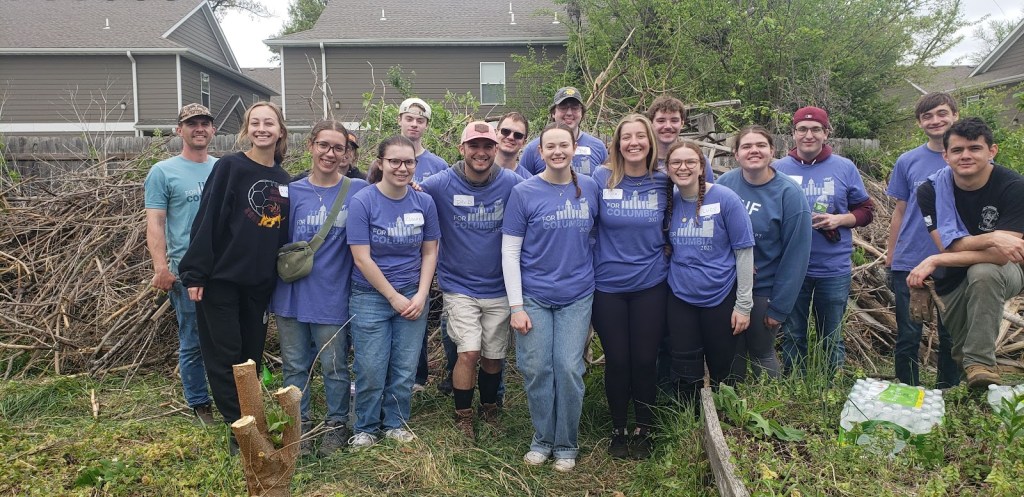
Unfortunately, on the eastern side the plots were scattered and most gardeners had installed what I called “Wild West” deer fencing around them. This was a waste of valuable space and made it nearly impossible to mow and weed eat the garden. However, despite these problems the garden was still in use by many families and the board wanted to see it used to its full potential. As we detailed in a previous post, “For Columbia Saves the Day (Again!) at Columbia’s Community Gardens,” we got invaluable help from For Columbia in April to get the garden cleaned up and ready for a re-set.

several volunteers pull out posts and fencing from among tall weeds in a wide shot of the garden area

East half of Ash St. Garden during For Columbia cleanup

At that point, we had cleaned up the mess for the property owners (YAY!), but if we wanted to save the remaining garden area, there was still a lot of work to do. To add to our stress, the gardening season was already upon us, so we had to move quickly. The most important requirement for member community gardens is that they have garden leaders who communicate with gardeners and the CGC as needed. Before the cleanup I had contacted the 2024 Ash Street gardeners and explained that the garden was shrinking and to keep it open we needed volunteers to lead it and  help us revamp it. The Ash Street Garden management team stepped up to oversee this large, diverse garden!

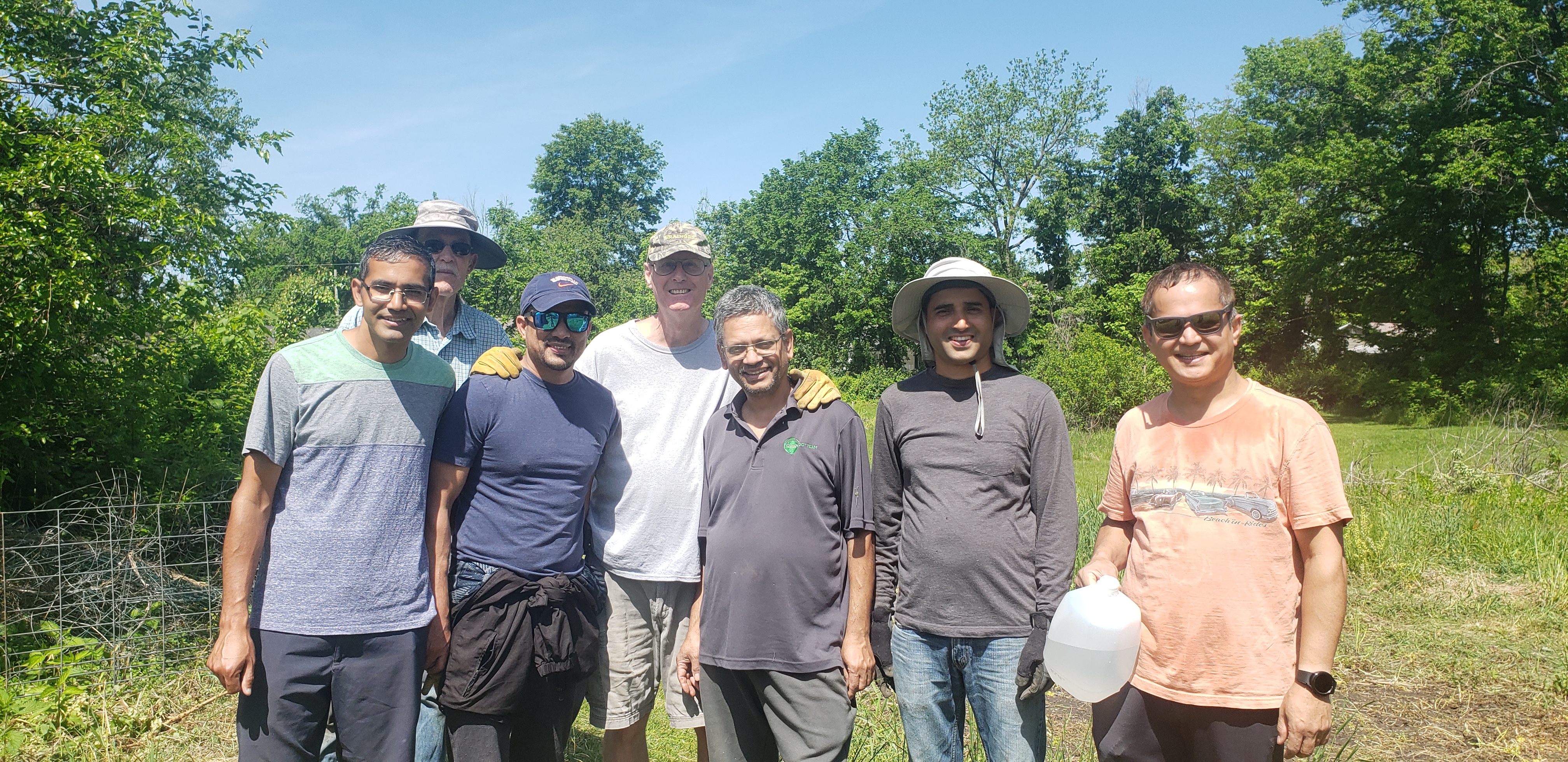
Some of the people who cleaned up the Ash St. garden, including some of the new garden leaders stand together in the cleared garden area

Some garden leaders and cleanup crew.

The leadership team consists of Rudra Baral, Dhruba Dhakal, Hari Koirala, and Pramod Dhakal, all of whom are past or present MU Extension scientists — a definite plus for the garden! Now that we had a team in place, I again contacted all the former gardeners and asked them to let me know ASAP if they wanted to continue. When I had a head count I went out with my husband, Matt, measured the remaining area and using a good old piece of graph paper mapped out new plots and paths that would be easy to mow around, reduce soil erosion and run south to north for maximum sun exposure.

Three members of a gardening family, including a young child, pose after pulling out their fall-planted garlic from the mostly-cleared Ash St. Garden in spring

Gardeners harvest last fall’s garlic before the tilling.

Next up, we needed to get the garden tilled. To do this, a crew of gardeners spent another long day clearing remaining trees and brush. We then hired someone to till the planned garden area. We laid out the plots with string and stakes, and the garden leaders began to assign the plots. Hoses were buried to reach the far ends of the garden from the one existing hydrant.

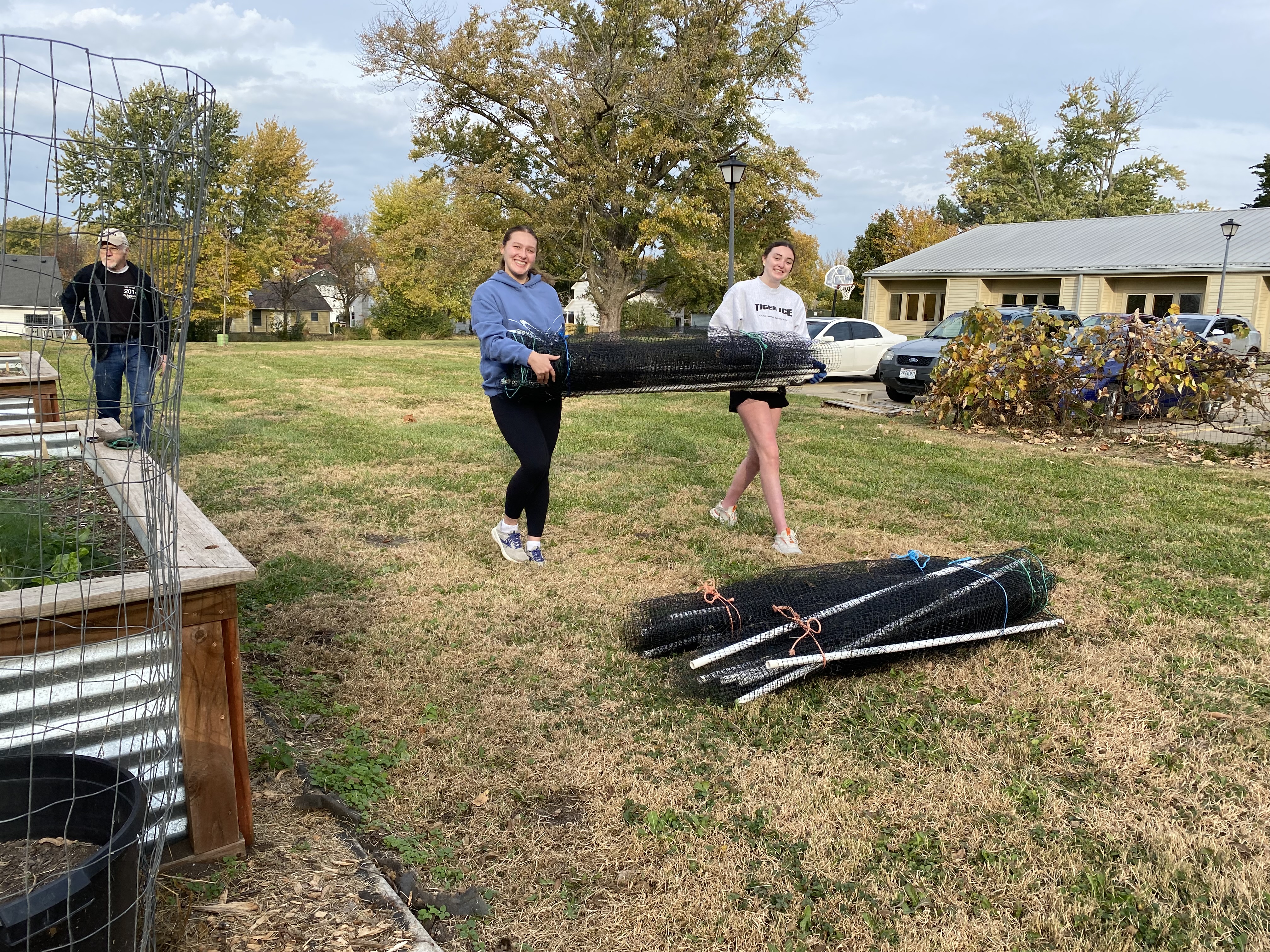
Finally, a crew of gardeners installed deer fencing materials that my husband hauled over there along with two gates he made to let equipment and gardeners in, while keeping out those pesky deer. No more “Wild West” make-do fencing needed! And thank you to the Veterans United Foundation, whose donation purchased the deer fencing materials.

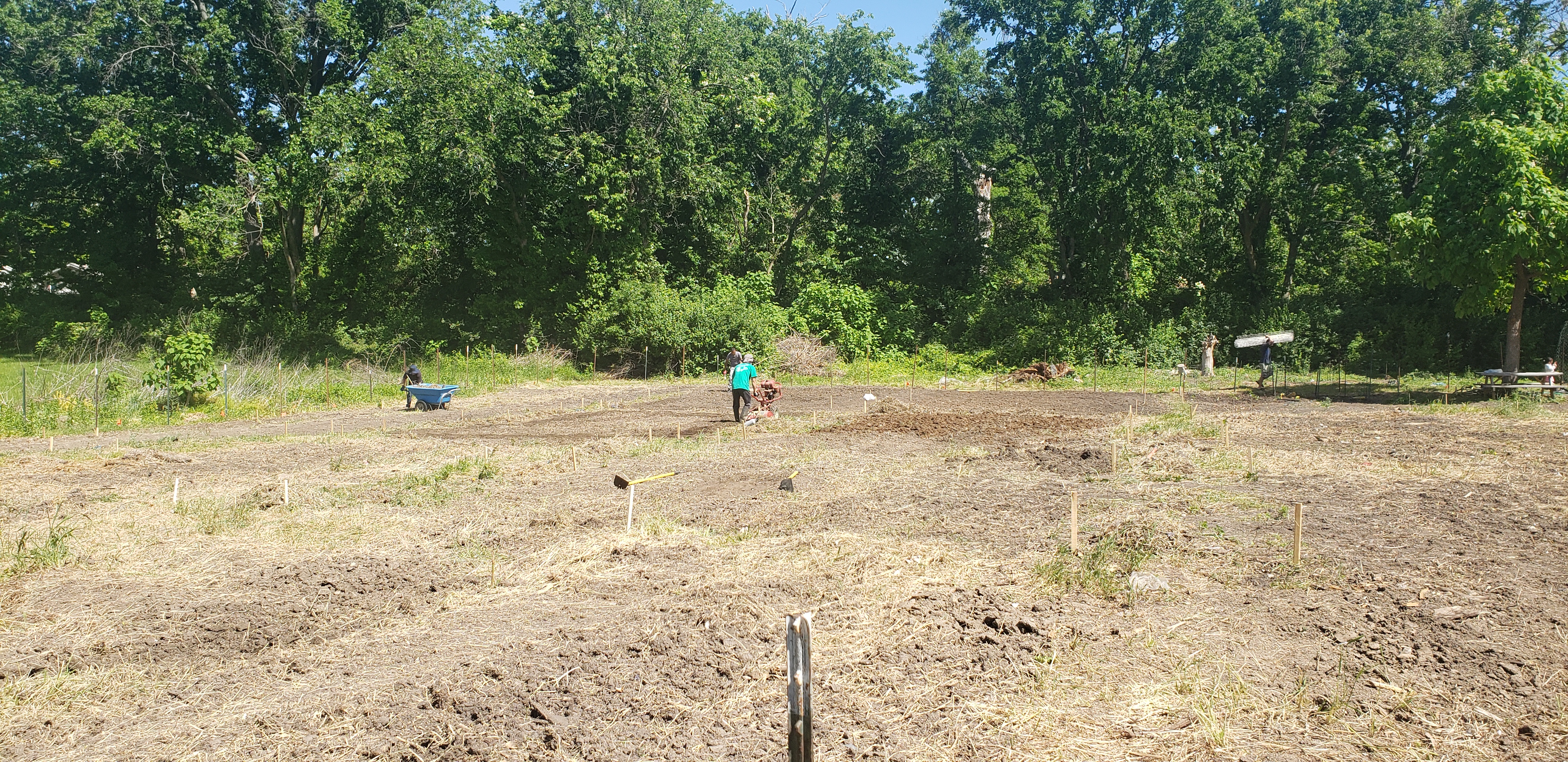
A wide shot showing the cleared garden area, with plots marked by posts and tilling underway.

Plots are marked and the second tilling is underway.


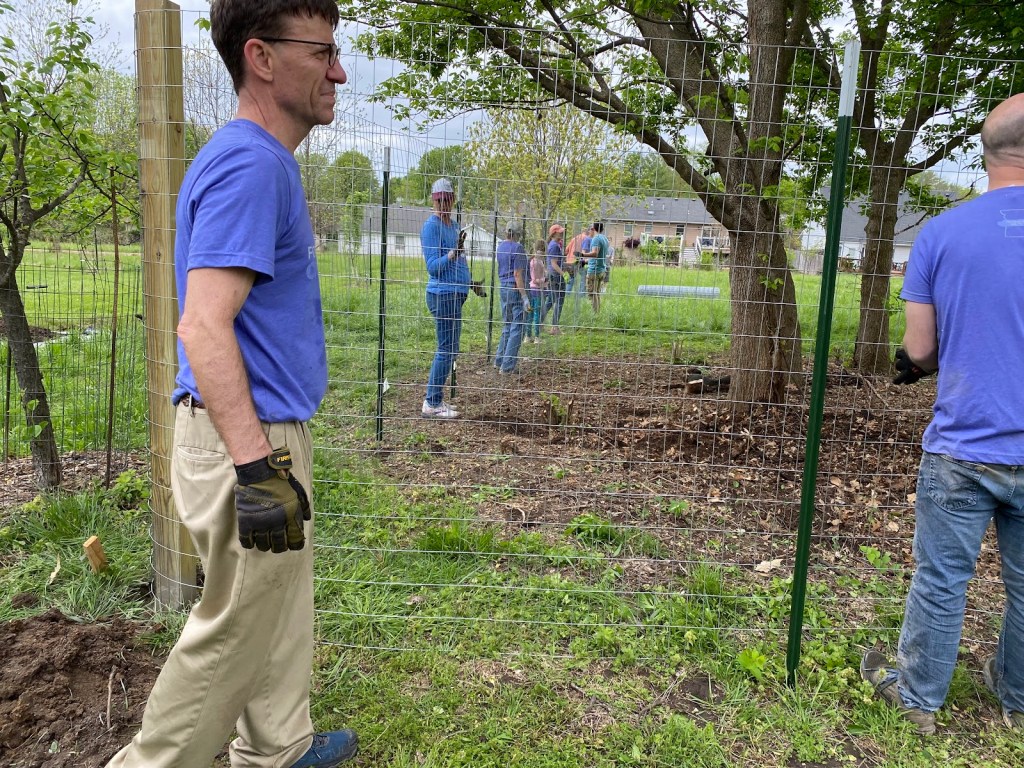
People stand on either side of six-foot fencing as they install it at the edge of the garden.

Installing deer fencing paid for by Veterans United Foundation.

a gardener stands in his plot surrounded by lush vegetable growth

A gardener in his plot in mid-summer.

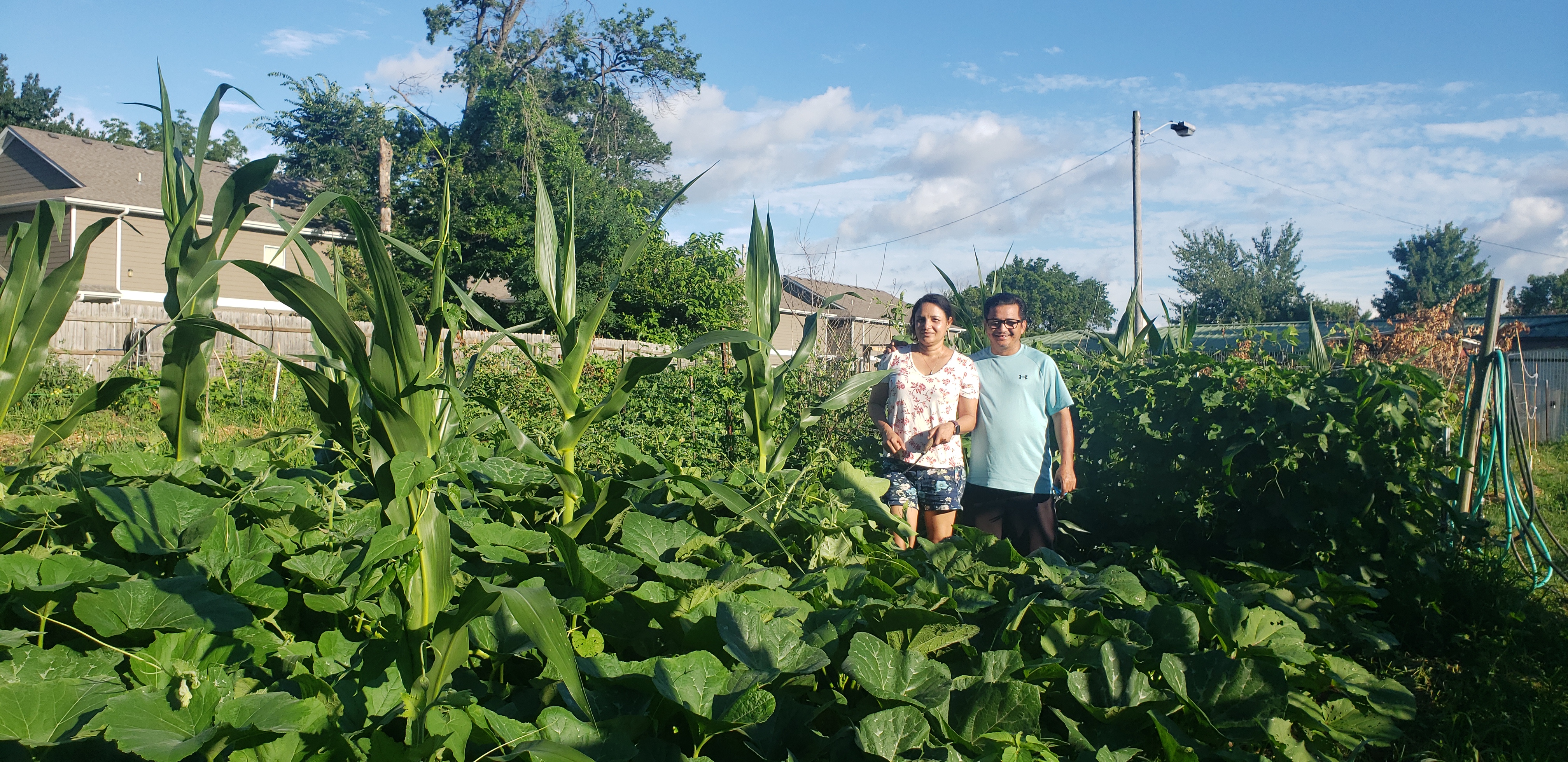
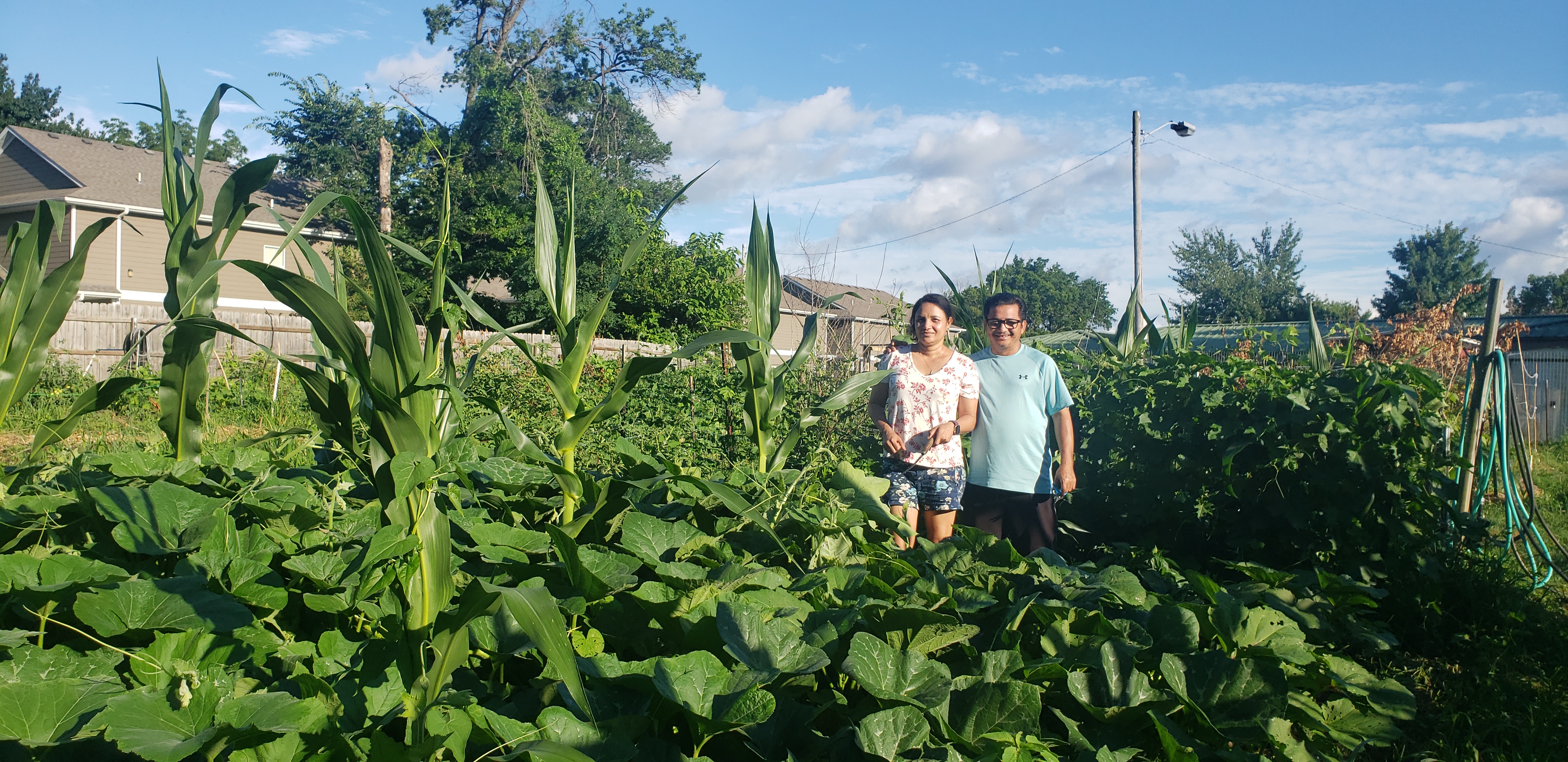
A pair of gardeners stands in their plot surrounded by lush vegetable growth

A pair of gardeners in their plot in mid-summer.

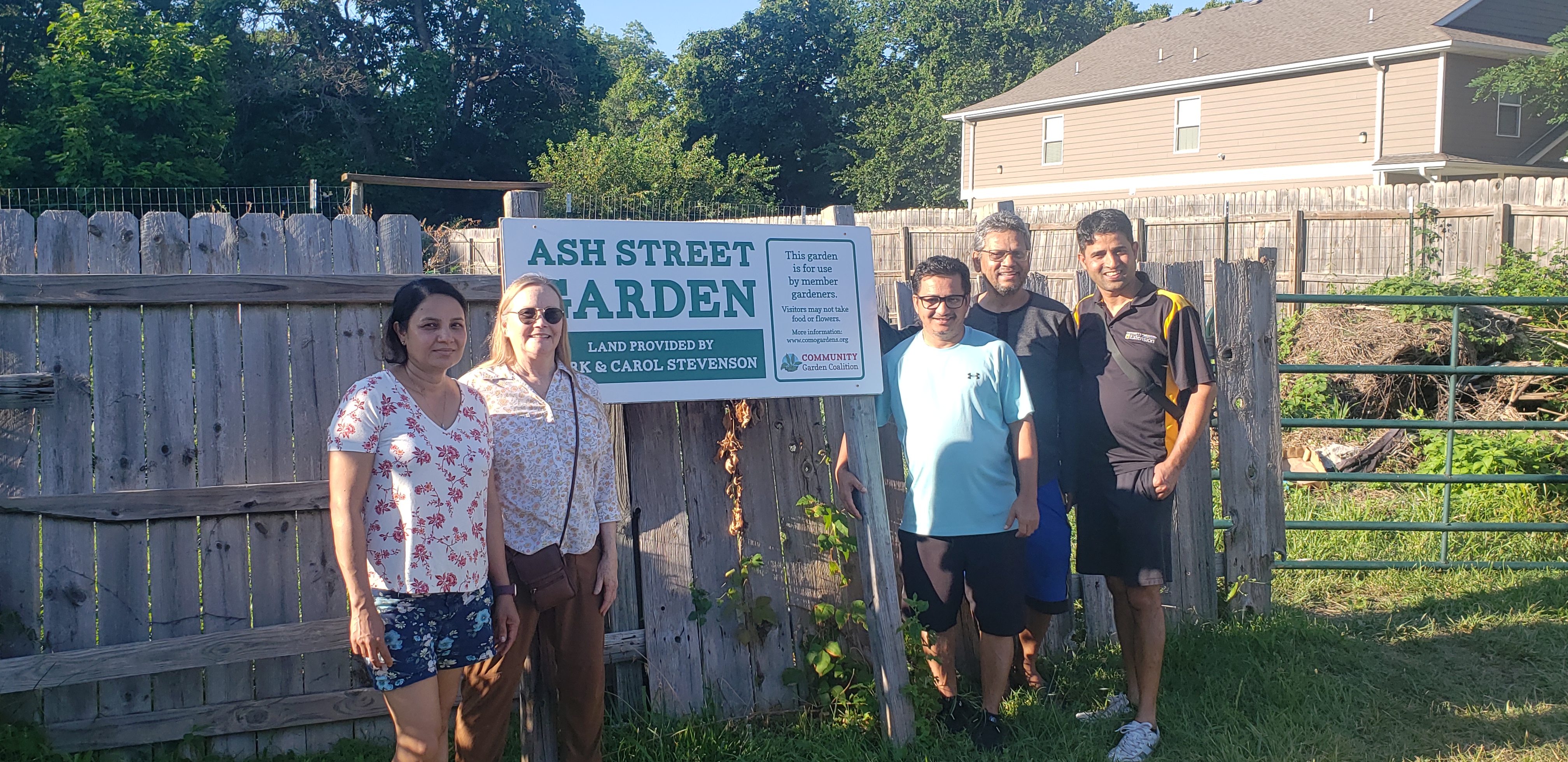
Garden leaders and others stand next to a large sign by the entrance to Ash St. garden

Garden leaders and friends after installing the new garden sign. It was paid for with a Love Your Block grant!

Despite the late start, the Ash Street Garden had a productive year! There are currently over 30 garden plots producing healthful food and medicines for more than 100 family members and many more friends. With your help and donations we hope to keep this garden going for at least another 19 years!

If you want to see community gardens like this one continue to thrive, please consider donating to support the Community Garden Coalition during CoMoGives! Giving begins on December 1.

For Columbia Saves the Day (Again!) at Columbia’s Community Gardens

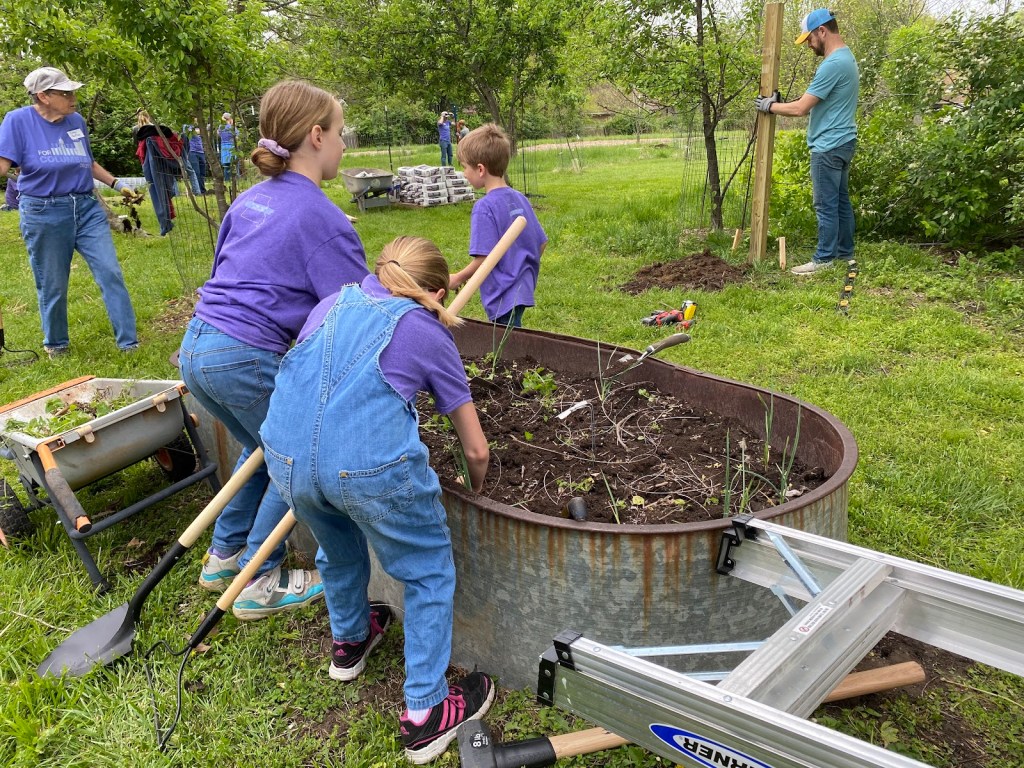
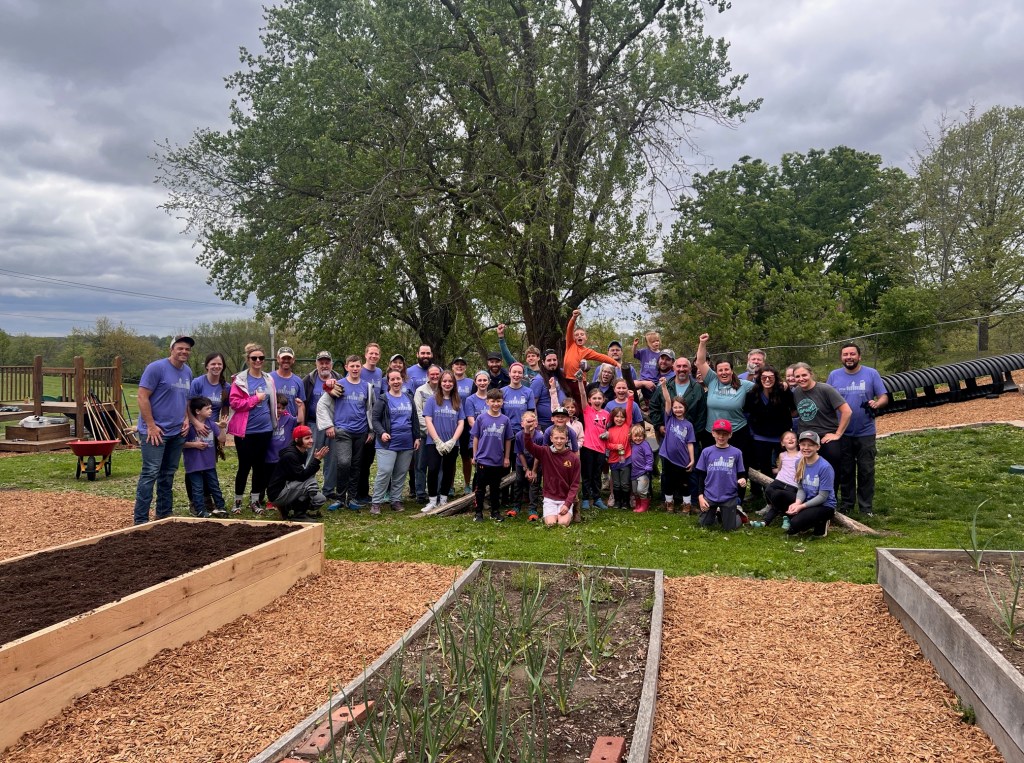
As a small nonprofit run by a handful of volunteers, we often need to ask for help in achieving our goals! We are so grateful for all the help that we have received from the volunteer service group For Columbia, organized by several of Mid-Missouri’s Christian churches under the leadership of Shelly Mayer of The Crossing. This year, For Columbia volunteers generously helped at three Community Garden Coalition member gardens during their April 26 city-wide volunteering event.

Deer Fencing at Interfaith Garden

This year, the Interfaith Garden decided that if they ever wanted to harvest fruit from their trees, they were going to have to expand their deer fencing perimeter. In 2024, they harvested ONE pear, while the rest went to fattening up the local deer! Fortunately, the CGC had grant monies received in 2023 from the Veterans United Foundation and two local Walmarts that were earmarked for deer fencing. We agreed to pay for the materials and suggested that they ask For Columbia if they could install it. 

For Columbia volunteers J.P. Watson and Tim Leibovich had led an incredibly successful installation of deer fencing at our Unite4Health garden in 2024, and, since that garden sat on top of a buried asphalt parking lot, we figured that installing one in actual soil would be a cakewalk for these seasoned pros and their volunteers. From all accounts it was — they even cleaned up the grounds and threw in a new raised bed while they were at it. Because this garden grows food solely for donation, this means more organic fruit for the Food Bank Market!

More Raised Beds at Windsor Street Garden

For Columbia also helped out at the nonprofit Windsor Street Montessori School. In 2024, For Columbia came in with a huge crew of volunteers and completely redid the grounds to make them easier to maintain and safer for the children. This spring, they came back to spruce things up and build more raised beds for the childrens’ veggie garden.

Renewing Ash St. Garden

And, finally, the biggest job: For Columbia was critical in helping renovate the large Ash St. Community Garden. The Ash St. Garden needed to shrink its footprint by more than half at the land owners’ request, and there had been also been a serious decline in the maintenance of the area. To protect from deer, many of the gardeners had erected makeshift fencing around their individual plots which had made mowing and weed-eating difficult. Lots of abandoned fencing as well as weeds, shrubs and small trees needed to be cleared away before the garden could re-start at a smaller size and get a good deer fence around it. The need for new garden leadership was an additional challenge. 

I started a conversation with Shelly Mayer, For Columbia’s lead organizer, and, with great trepidation, Cheryl Jensen and I met Shelly and three other volunteers at the garden to see if they might be willing to take on this overwhelming task. Despite the chilly mid-January weather everyone just stood and stared at the mess in stunned silence – it’s funny now, but it wasn’t then! To our relief, Shelly and crew agreed to take it on. 

After many conversations and much planning by Shelly and our two fearless volunteer leaders, Bennett Arey and Noah Wood, the day of volunteering, April 26th arrived. With a crew of about 30 volunteers from local churches and a dozen Ash Street gardeners, we started assigning tasks. First up, was the removal of hundreds of pieces of metal from the makeshift fencing. These ranged from reusable t-posts to pieces of old beds and mattresses. Shelly had arranged with Scott Ratliff’s tree service to send in a crew with his big truck with a claw. The volunteers piled all the waste metal where it could be reached from the parking lot and they loaded it up with the claw and sold it for scrap. 

Then we moved on to untreated lumber, which Scott said the city would take without charging us. Finally the treated lumber, weeds and other unsalvageable debris went into dumpsters. The city had kindly supplied us with a big walk-in type, and Bennett paid out of his own pocket for two loads in a private dumpster. This generosity and careful sorting of materials saved us thousands of dollars in landfill fees!!!

Once again, For Columbia has come through for the Community Garden Coalition, making the board and many gardeners very happy!  

Stay tuned for part 2 of the rehabilitation of Ash Street garden. The area was cleared of the major debris, but there was plenty more to do before this garden was running again!

THANK YOU for Showing Your Support!

Thank You!! {heart} December Donors. Community Gardens Create Healthy Communities

We are so happy to report that the Coalition has received over $4,000 in donations this year through our CoMoGives campaign and other donations!!!

These gifts mean A LOT to our small, all-volunteer organization! We very grateful for the continued interest and support of our mission as we move into our 42nd year as an organization!

Of course, if you meant to donate and missed the CoMoGives deadline, please know that you can donate anytime via our PayPal donations portal.

We wish all of our gardeners, volunteers and supporters a Happy New Year. We hope you can spend this winter planning your best garden ever!

Spotlight on the Interfaith Garden

The Community Garden Coalition has been helping Boone County residents grow healthful produce and develop gardening communities for over 40 years. One of our member gardens that I think epitomizes the ideal of community gardening is the Interfaith Garden

The coordinators of the Interfaith Garden stand next to their garden sign.
From left: Lily Chan, Noah Heringman, Suzanne Hemmann, Susan DeMian and Brent Lowenberg. Photo credit: Kathy Doisy

Originally, it began in 2006 as the Congregation Beth Shalom (CBS) Community Garden, to provide a service opportunity for students at the CBS school with the harvest donated to the Food Bank. Student volunteers from MU and local secondary schools helped maintain the garden until 2009, when the St. Thomas More Newman Center Parish was asked to help. 

For the past decade, this garden has raised and donated an annual average of 1,700 pounds of organic produce to the Food Bank for Central and Northeast Missouri. Sustaining such a massive effort takes a lot of help! 

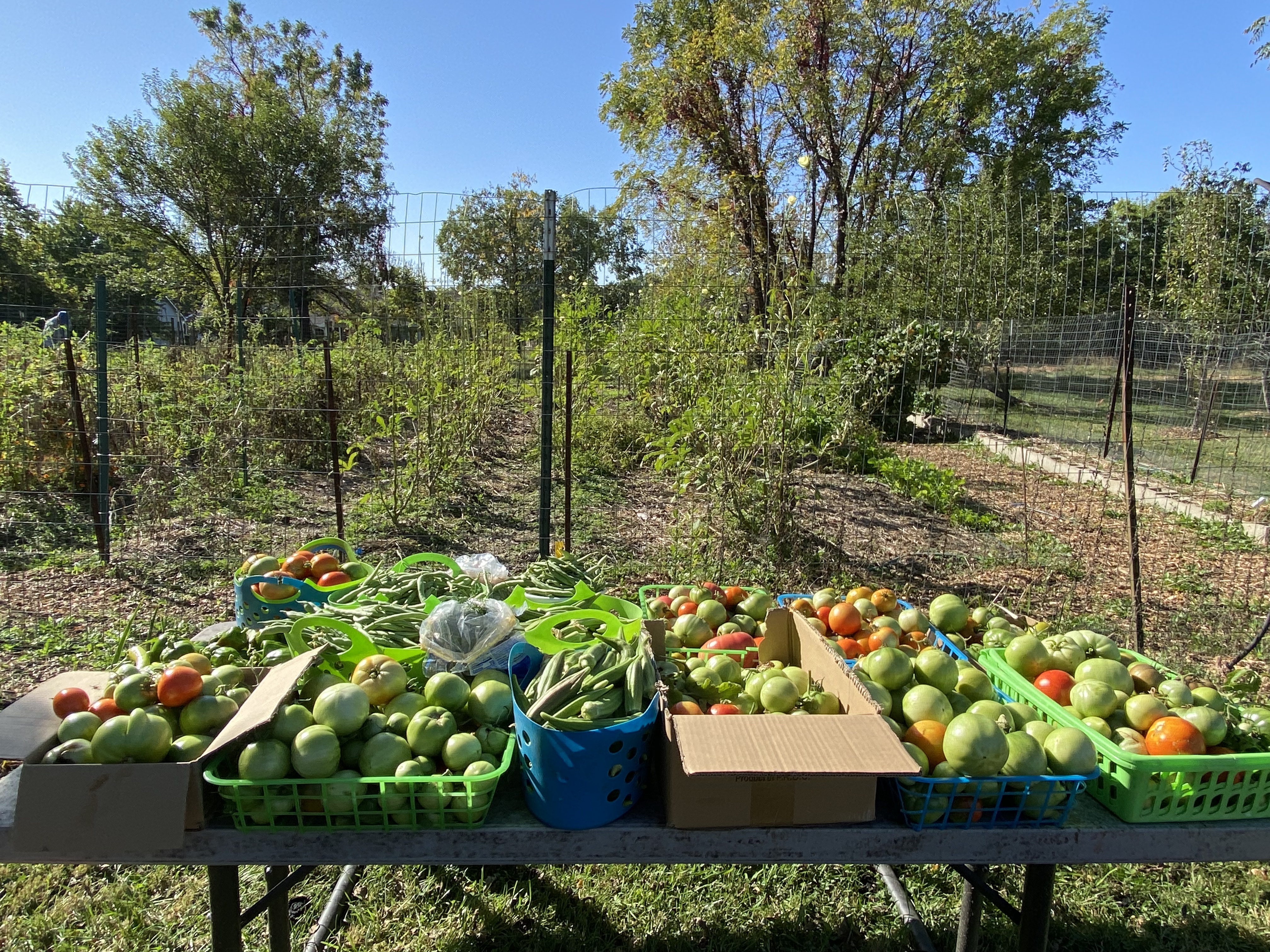
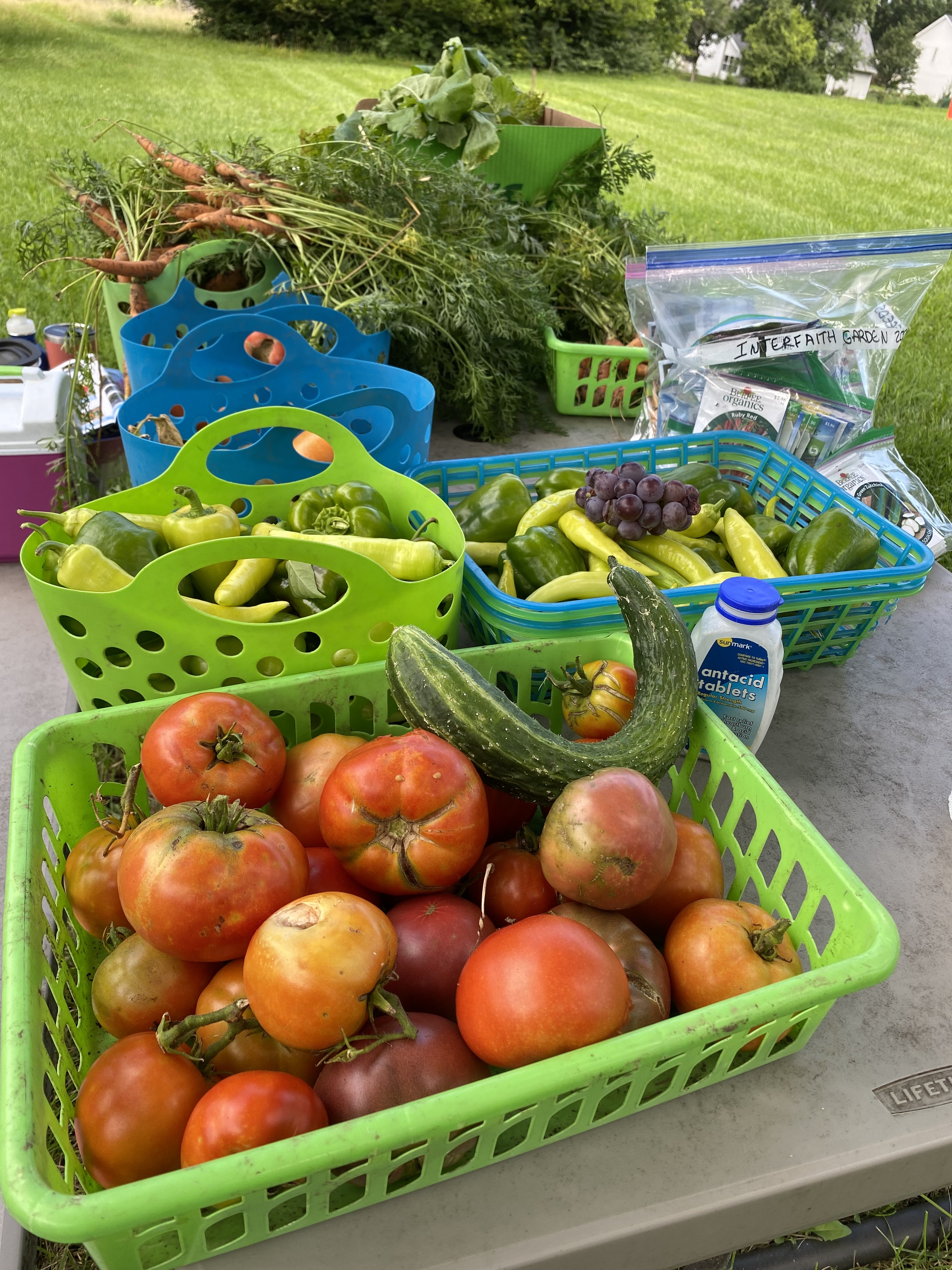
Volunteers under the leadership of Lily Chan, Susan DeMian, Brent Lowenberg, and Noah Heringman meet 1 to 2 times a week to prepare the beds, plant, weed and harvest. The variety of produce varies with the season, but includes lettuces, spinach, radishes, mustard greens, turnips, beets, chard, kale, snow peas, collards, carrots, potatoes, sweet potatoes, onions, herbs, beans, peas, peppers, tomatoes, okra, squash, cucumber, garlic, walnuts, chestnuts, persimmons, strawberries, grapes, apples, peaches, pears, and rhubarb! If I was a client of the Food Bank, I’d make sure to go on the days that Interfaith delivers!


Volunteers come from all over Columbia, but regulars include congregants from Beth Shalom, Newman Center, and our Lady of Lourdes Catholic Church. Susan and Mike Devaney, Marilyn and Dennis Bettenhausen, and Laura Flacks-Narrol started tomato, pepper, and herb seeds and donated seedlings to the garden. A few MU College of Engineering honor societies, Student Council and Tolton High School seniors offer to volunteer in the garden one to two times a year as their service projects.


To achieve this level of success in Boone County takes more than hard work – it requires deer fencing! Interfaith was fenced many years ago with the financial help of the CGC, and plans are in the works to fence in the large orchard that surrounds the fenced vegetable garden. The local deer really like fresh fruit and frequently pick the fruit trees clean!

As the year winds down, please consider supporting Interfaith Garden and the Community Garden Coalition.

collage of photos of people using community gardens along with the logos for the Community Garden Coalition and CoMoGives and text saying "Help our gardens grow with your donation! Through Midnight, December 31."

Can You Help Support Community Gardens?

collage of photos of people using community gardens along with the logos for the Community Garden Coalition and CoMoGives and text saying "Help our gardens grow with your donation! Through Midnight, December 31."

As we head into winter and our member gardens go largely dormant, we’re asking our supporters to consider making a donation to fund community gardening for 2025. You can show your support with a donation via CoMoGives, now through December 31. Here’s a note from one of our newer board members, Ginny Trauth.

Hello to all Community Garden Coalition supporters and friends!

My name is Ginny Trauth and as a fresher face to the CGC all-volunteer board I’d like to introduce myself and share what being a part of CGC means to me.

Three years ago, I stumbled into the world of community gardening when I moved to a new part of town and regularly drove past CGC’s Unite4Health garden. After some online searching I learned that that garden was part of CGC and even though I was a pretty inexperienced gardener, I decided to reach out and see if I could join.

With CGC’s assistance, through compost, water, seeds, straw, and tools, and my garden leader’s knowledge I was able to hit the ground running and quickly caught the gardening bug! Working on my garden, seeing it grow, and meeting new people in my community  became a real joy in my life. My community garden gave so much to me that I decided I needed to give back to it. First through financial donations and working on volunteer projects and, when the opportunity presented itself, as a board member.

During this time of year, when thankfulness and community are at the top of mind, I ask that you consider donating to CGC to help give back to and support an organization that gives to and supports so many!

Donations to CGC and to other wonderful community organizations can be made at through CoMoGives until December 31 at 11:59 PM.

I thank you and wish you a warm holiday season!
– Ginny Trauth

Gratitude for Community Gardening

To all the community gardeners, leaders, volunteers and supporters out there: let’s give thanks for another gardening season!

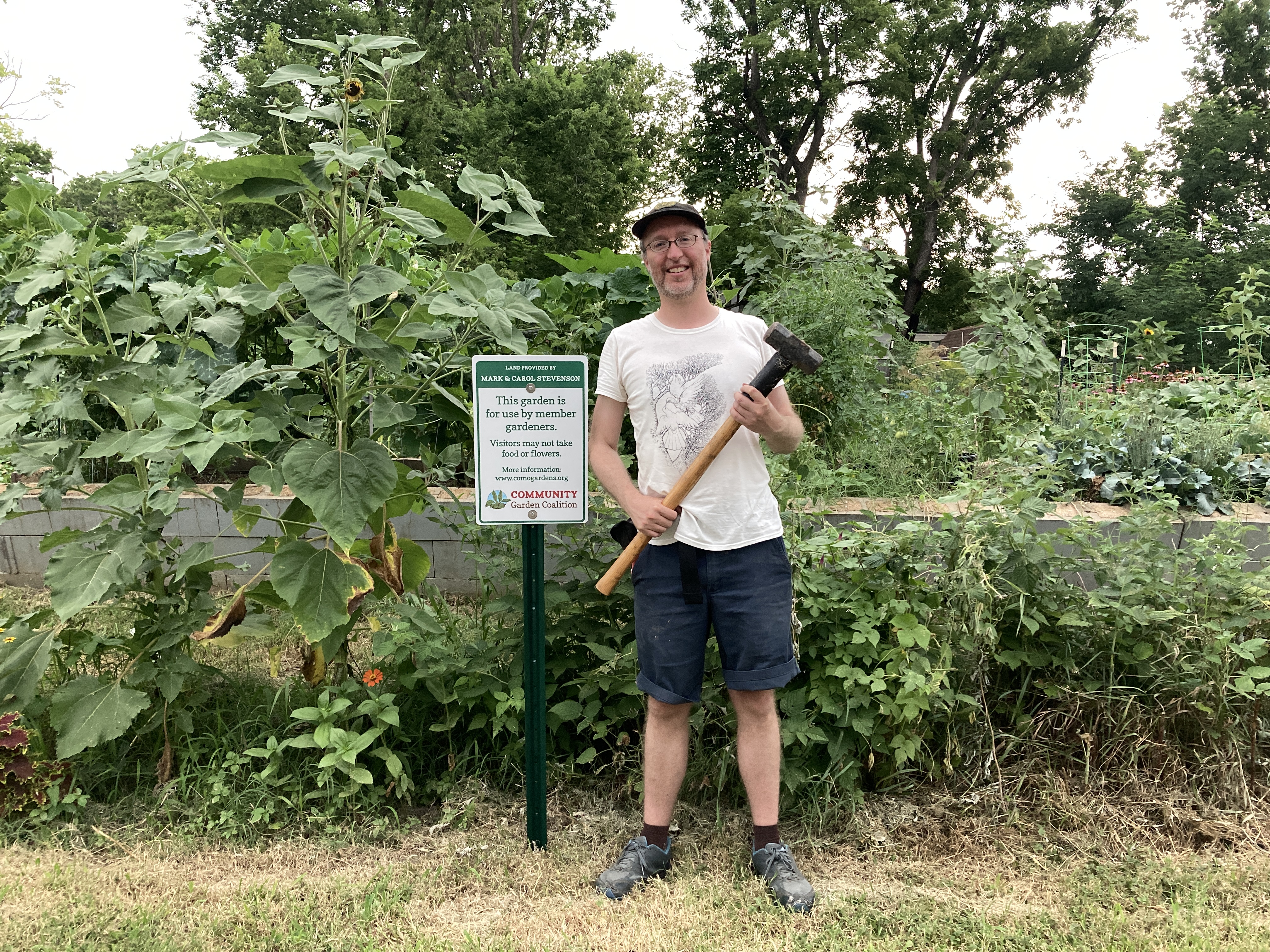
As a gardener at Ninth St. community garden, I’m grateful for these awesome fat carrots I just harvested. And for the fellow gardeners I’ve enjoyed chatting with this year. And, as always, for my hard-working volunteer garden leader Barb, and the longtime support of landowners Mark and Carole Stevenson. 

On behalf of the whole CGC board, we are so grateful to all the landowners and garden leaders that allow the various gardens in our network to flourish.

If you were a gardener this year, please take some time now to be sure you’ve done the following things:

  1. Give us your feedback! Use this form to tell us how your gardening went this year.
  2. Tell your garden leader whether or not you want to keep using your garden through the winter or next spring.
  3. Clean up your garden plot. Ask your garden leader if you have questions about expectations for keeping your plot tidy over the winter. This is especially important if you are NOT going to use your plot again.

To all our supporters: we’re so grateful for you, too! And another opportunity to support community gardening is coming right up. We’ll be participating in the CoMoGives local giving campaign which starts on December 1. Donations made through CoMoGives form a huge part of our budget and therefore go to pay water bills, buy hoses and tools, mow the grass, purchase mulch and compost and other supplies that support community gardens.

We’re a small organization, so even a modest donation goes a long way! Watch for our emails and social media posts during the month of December for links to CoMoGives.

Unite4Health garden

Interfaith Garden

Unhappy Deer = Happier Gardeners!

Deer depredation is becoming a big problem in many of our community gardens. Believe it or not, the white-tailed deer population for Missouri in 1925 was reported to be 400 animals. Recent estimates by the Missouri Department of Conservation put the current population at about 1.4 million. It’s not surprising that they are finding their way into our gardens in search of food!

The best deterrent for protecting gardens is deer fencing. Unfortunately, installing fencing is an expensive and laborious procedure that must be approved by the property owner and only one of the many gardens that we help (Claudell) is owned by the Community Garden Coalition.

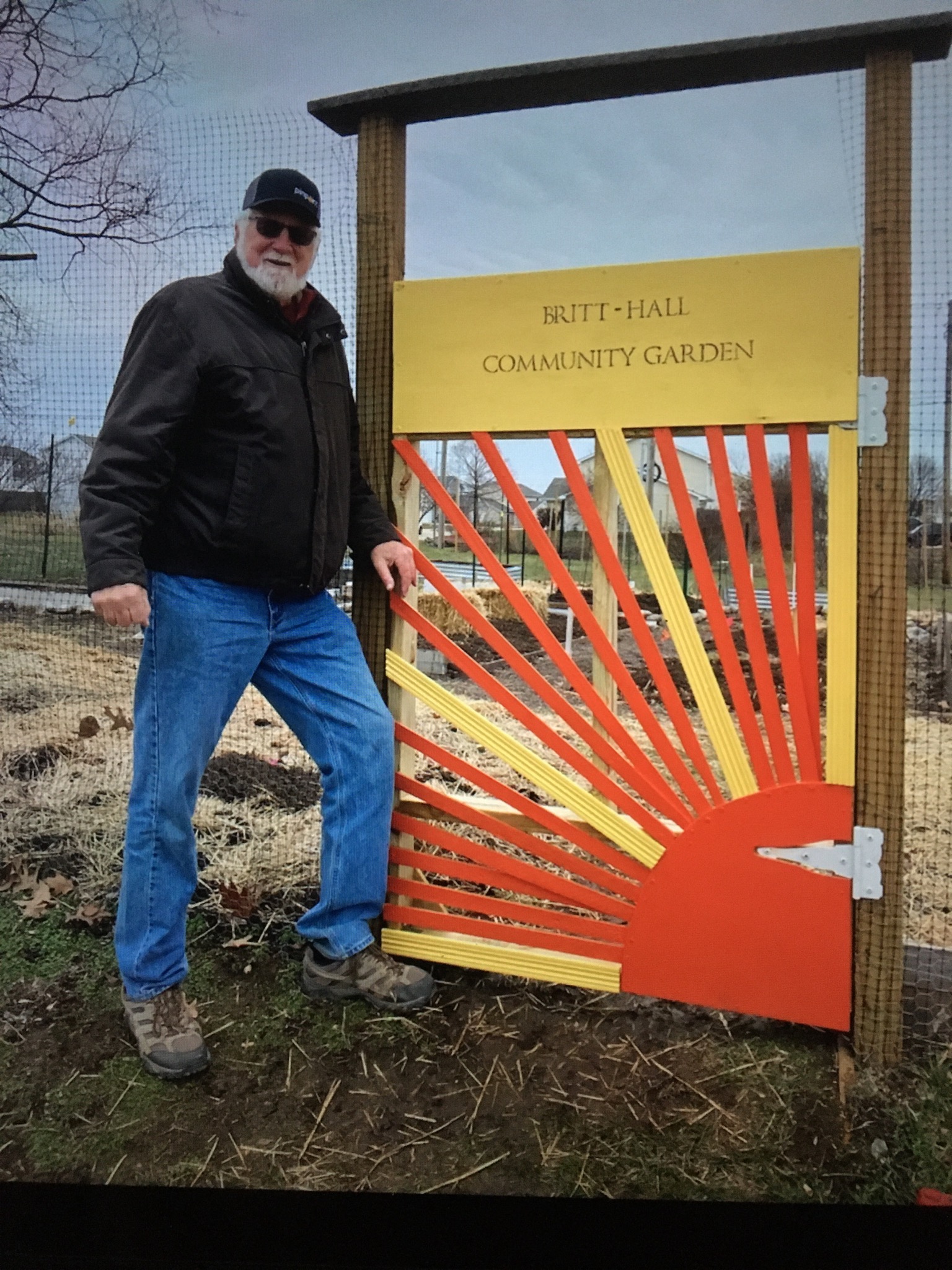
We were successful in obtaining some funding through three grant proposals. In 2023, the Veterans United Foundation gave us $5,000 and two local Walmarts gave us $2,000 to use towards the installation of deer fencing. This was enough to begin fencing some of the gardens where we were receiving the most complaints. Cheryl Jensen and Eric Lorenz, the garden leaders at two city-owned gardens, Unite4Health and Britt-Hall, teamed up to determine the best materials and methods to protect those gardens. At Britt-Hall, Eric, with some help from Cheryl, installed all the fencing and made a lovely gate (see photo).

Unfortunately, installation at Unite4Health was much more difficult because underneath the garden is part of the old Nowell’s grocery store parking lot! Things were looking grim for digging post holes until ForColumbia, a volunteer service group organized by several of Mid-Missouri’s christian churches under the leadership of Shelly Mayer (The Crossing), contacted us to see if there were any garden projects that they could volunteer for. When Cheryl contacted her and explained the situation, Shelly was not deterred. She met with us and brought along two of the most wonderful and determined lead volunteers, J.P. Watson and Tim Leibovich. J.P. and Tim worked for several days drilling anchor holes with a commercial auger so the posts could be secured in the hard subsurface.

Two volunteers run a large motorized auger to drill through the soil and buried pavement to make post holes for fencing at Unite4Health garden
J.P. Watson and Tim Leibovich with auger.  Photo Credit: Cheryl Jensen

Finally, on April 27, a large crew of hardworking, caring people arrived to install the fencing and repair raised beds. It was a nice day, and, due to the wonderful planning of J.P., Tim, and Cheryl, everything went smoothly. By the time they left, Unite4Health was fenced in — much to the chagrin of the local deer population! On top of all of this, ForColumbia paid for many additional expenses.

volunteers from ForColumbia 2024 pose with garden leader Cheryl next to some of the tall netted fencing meant to keep deer out of Unite4Health garden
J.P., Cheryl, Megan, Katie, and Tim. Photo Credit: J.P. Watson.

We are so thankful for the help of ForColumbia, the Veterans United Foundation and Walmart! Now, gardeners at these two gardens are able to grow more healthful produce, and they only have to share it with family and friends!

Free Native Plant Lecture Featuring Doug Tallamy

There’s a great opportunity coming up to hear from a real expert on native plant ecology. Doug Tallamy, a leading proponent for native planting in the country, is coming to speak on Thursday, October 24 at 6:30 p.m. for free at MU’s Monsanto auditorium. This is event is brought to us by the Mizzou Botanic Garden as the 2024 Jacquelyn K. Jones Lecture.

Establishing native plantings in or near your community garden is a great way to benefit pollinators and the wider local environment. Doug Tallamy’s Homegrown National Park challenge encourages restoration of 20 million acres of privately owned lands with native plant species to attract co-evolved insect and animal species to mitigate ecosystems loss.

Learn more about the lecture and the Mizzou Botanic Garden on their site. And, if you can’t make the event, the Daniel Boone Regional Library is a great resource for Tallamy’s books.